
REVIEW · NAPLES
Naples: The Bourbon Tunnel Guided Tour with Entrance Ticket
Book on GetYourGuide →Operated by Galleria Borbonica · Bookable on GetYourGuide
Naples turns feral underground. In the Bourbon Tunnel, you follow an underground escape route started in 1853, then watch how it was reused through centuries. I love how the guide threads WWII evidence into the story, including handwritten messages found in the tunnels. I also love the strange mix of old power and everyday grit: fascist-period statues plus an exhibition of cars and motorcycles left behind for years.
One thing to plan for: the stairs. There are 90 steps at the entrance, and if you choose the option that includes the Via delle Memorie underground walk, that’s 115 steps at the start plus more time on your feet underground. If you’re older or unsure about stairs, go slow and pick the pace you need.
In This Review
- Key highlights worth your attention
- Bourbon Tunnel: the 1853 reason this passage was dug
- The descent: 90 steps, cool air, and the pace that matters
- WWII traces: handwritten messages and what the subsoil remembers
- Earlier layers you’ll pass through: 16th-century caves and a bomb-shelter tank
- Fascist-era statues plus recovered vehicles: a jarring mix you can’t forget
- Via delle Memorie option: the extra underground route (and the extra stairs)
- Guides and small-group energy: names you might hear
- What to ask yourself before you go
- Timing and the flow underground: short on the clock, long in meaning
- Practical value: why $12 makes sense for what you get
- Who should book this tour
- Should you book the Naples Bourbon Tunnel guided tour?
- FAQ
- How long is the Bourbon Tunnel guided tour?
- How much does the tour cost?
- What’s included in the ticket?
- Where does the tour start?
- Does the Via delle Memorie option change the entrance stairs?
- What languages are the guides?
- Is there a small-group option?
- Are children allowed?
- Can I cancel if my plans change?
Key highlights worth your attention
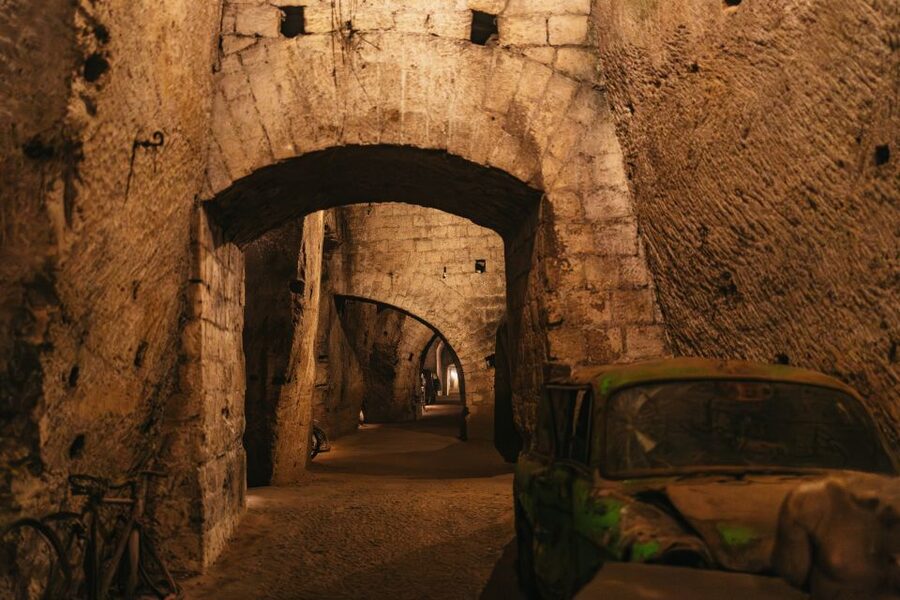
- A guided underground story from 1853 to WWII, with the tunnel’s changing jobs explained clearly
- WWII traces you can actually see, including handwritten messages left by people who were there
- Fascist-period statues mixed with later underground uses, so the place feels honest and complicated
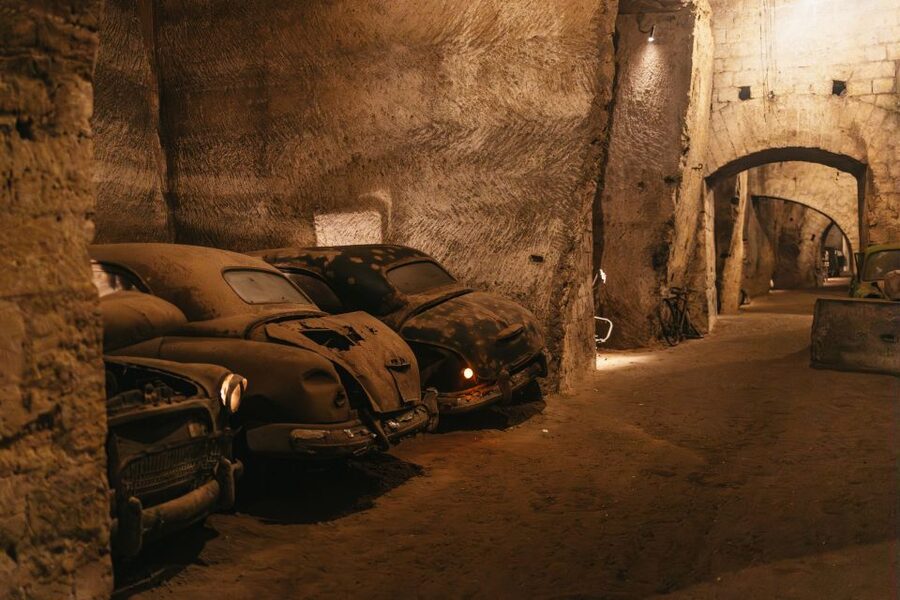
- A display of old cars and motorcycles, recovered after years of being buried under grime
- Optional Via delle Memorie route, an extra underground segment carved from the tuff rock
- Small groups and live guides in English or Italian, with enough room for questions
Bourbon Tunnel: the 1853 reason this passage was dug
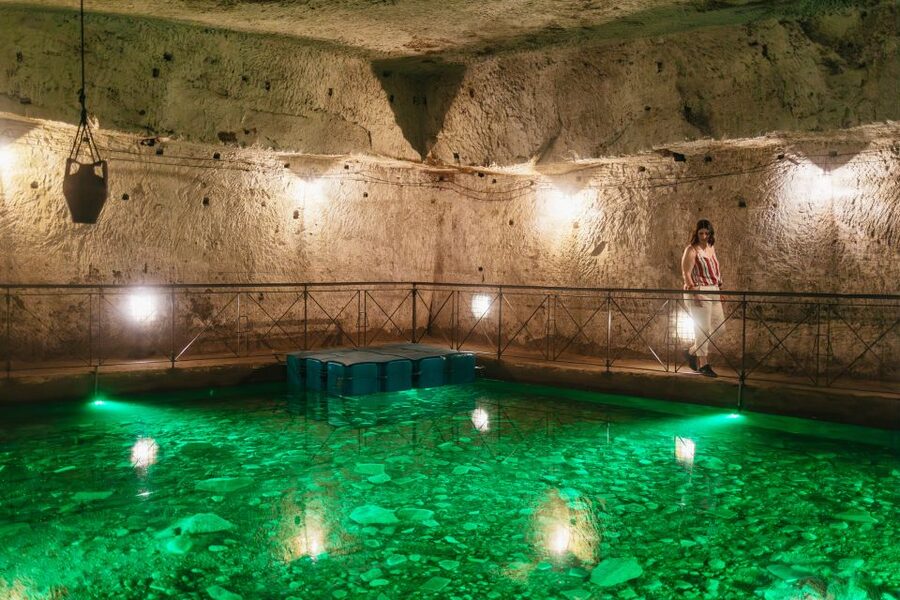
This tour starts in the basement area of Palazzo Serra di Cassano, then you head into the Bourbon Tunnel system. The tunnel dates to 1853, built under Ferdinand II of Bourbon. His idea was practical and tense: he worried about rebellion and wanted a way to get from the Royal Palace area to a safer barracks route on Via della Pace (today called Via Morelli).
What’s really compelling is that the tunnel’s purpose kept shifting. Even before World War II, the site had layers—caves from earlier centuries and underground infrastructure that later got repurposed. You’re not just looking at a dark corridor; you’re moving through a physical record of how Naples solved problems underground when the surface got dangerous.
You can also read our reviews of more tours and experiences in Naples.


The descent: 90 steps, cool air, and the pace that matters
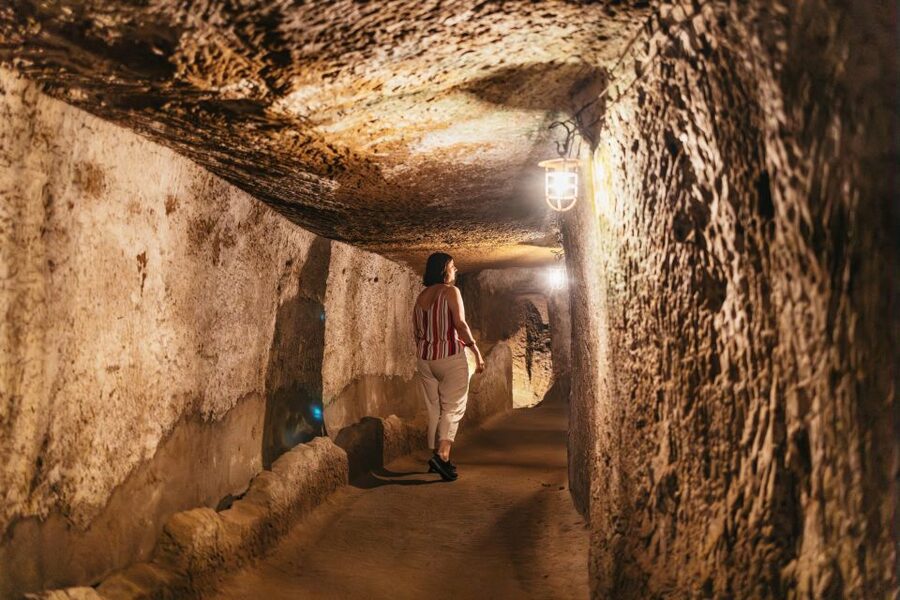
Before the story starts feeling full-on, you hit the real “ticket punch” part: stairs. The entrance has a staircase with 90 steps, and that matters because it sets the tone for the whole experience. One tall visitor said it felt fine after the initial staircase down, which is a good reminder to take the first minutes seriously and not rush.
Once you’re inside, the air is cooler than street level, and that relief is part of the charm. You’ll still be walking in an underground environment where visibility can be tricky, especially for older people, so good lighting and a patient guide route you through the spaces. I’d treat this as a short hike where the reward is the history—plan on slower steps and a steady breath.
WWII traces: handwritten messages and what the subsoil remembers
A standout part of the tour is the World War II layer. The Bourbon Tunnel wasn’t just sitting there. During WWII, it was used as a military hospital, and later it became something like a Hall Judicial Deposit. That means the tunnel holds marks of trauma, recovery, and bureaucracy, all stacked on top of each other.
In the tunnel areas, you can look for handwritten messages—notes of wishes and desolation from people who lived through that period. It’s the kind of detail that makes the history feel less like a textbook and more like lived time. The guide doesn’t just point; they connect the emotional tone of those messages to the tunnel’s changing roles.
Earlier layers you’ll pass through: 16th-century caves and a bomb-shelter tank
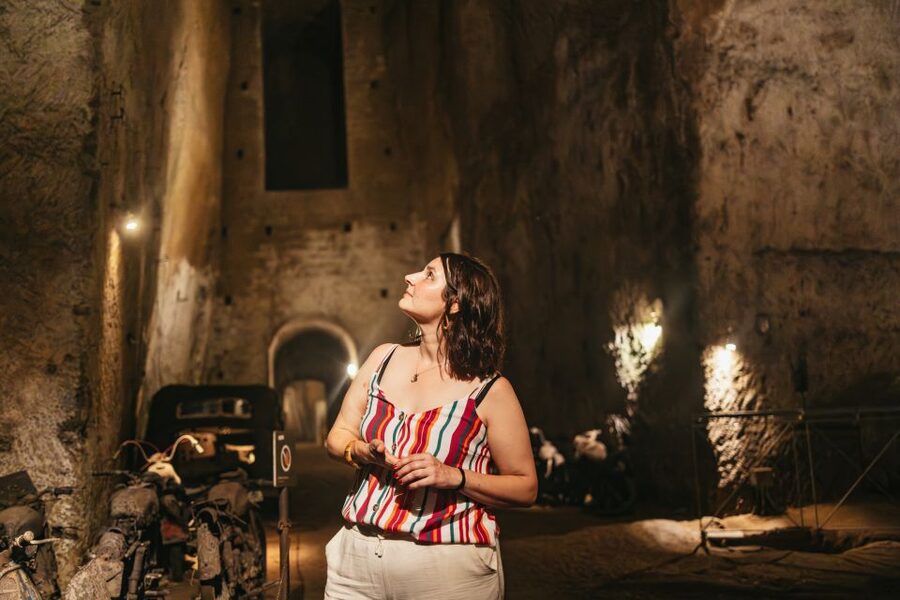
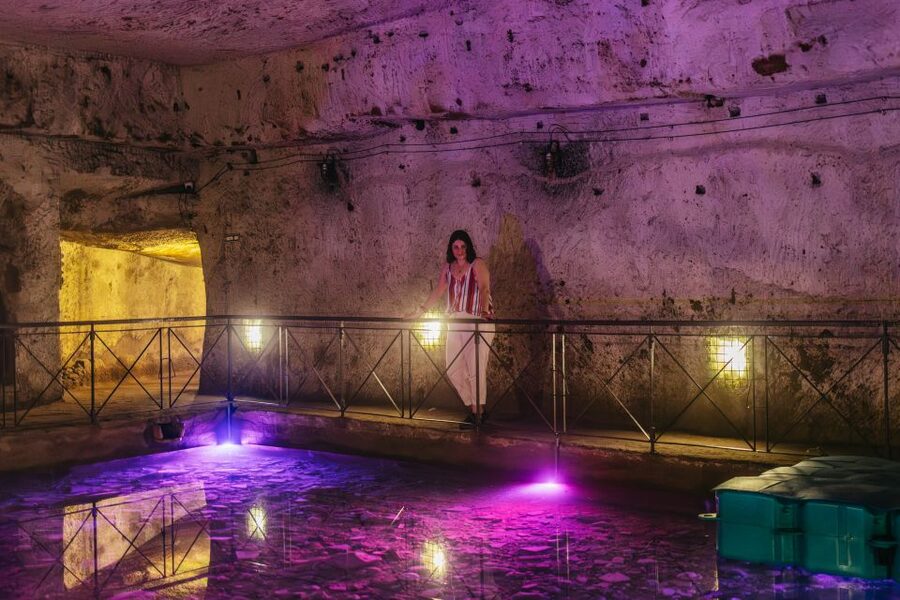
The tour also gives you stops tied to older Naples. You’ll see WWII-era finds, yes, but you’ll also encounter traces that go back further—like 16th-century caves. That helps you understand that Naples’ underground wasn’t only a wartime solution. It was a long-running space of storage, shelter, and survival.
Another high point is a water tank from the 17th century. Later, that same tank was used as a bomb shelter. Put that together and you get a clear theme: the city repeatedly repurposed infrastructure underground instead of starting from scratch every time crisis hit.
Fascist-era statues plus recovered vehicles: a jarring mix you can’t forget
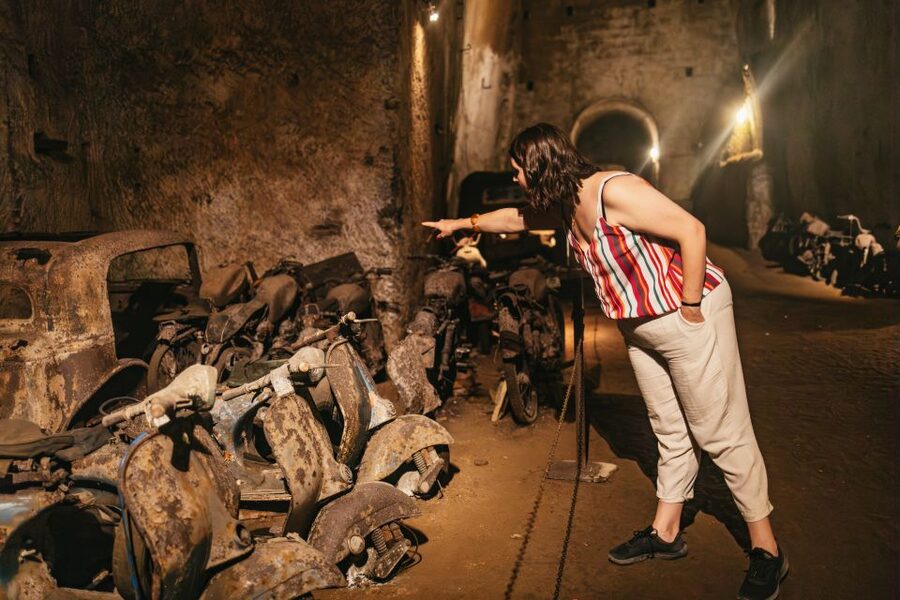
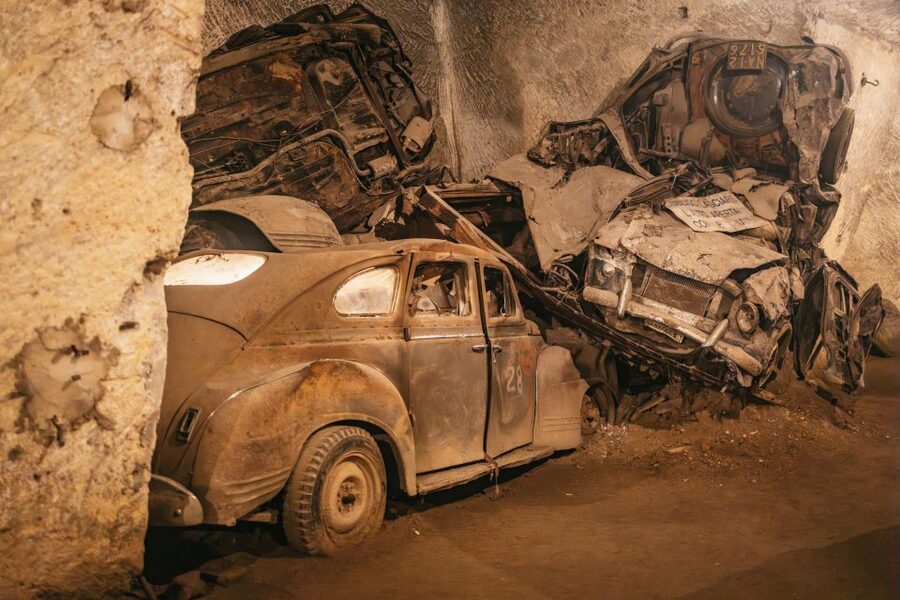
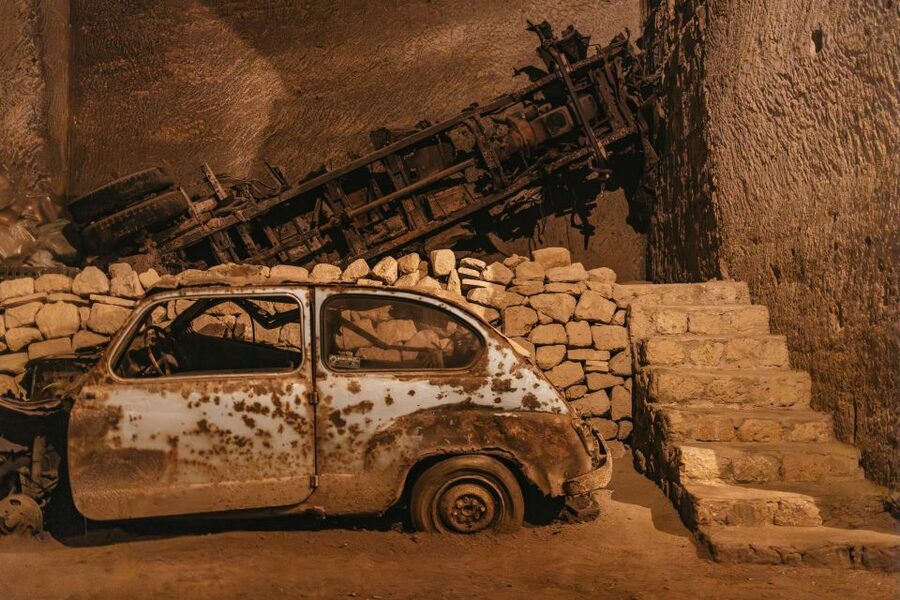
Not all the tunnel’s interest is tragic. Some of it is visually strange in a way that stays with you. In the tunnels, you’ll see statues dating back to the fascist period. You’ll also get an exhibition of cars and motorcycles that were abandoned for years and then cleaned up and brought back into view.
That combination can feel unsettling, but it makes the tour worth it. You’re seeing how different eras left physical material behind—art and transport—then later those objects became debris, then became artifacts again. It’s a reminder that history isn’t only documents and dates; it’s also objects waiting underground for someone to explain them.
Via delle Memorie option: the extra underground route (and the extra stairs)
If you want more than the Bourbon Tunnel segment, choose the option that adds the Via delle Memorie route. This is described as a historic underground route carved out of the tuff, which gives it a different feel from the main tunnel passages.
Here’s the practical catch: the entrance stairs for that option increase to 115 steps. That doesn’t make it “hard,” but it does mean you should be honest with yourself about mobility and endurance. The payoff is that the extra walking segment expands what you see, and it can also help you avoid feeling like you spent the whole time only looking at one narrow stretch.
Guides and small-group energy: names you might hear
The guides matter here because the place is physical and the story is layered. I’ve seen guides like David deliver clear history in English and work through questions without making people feel rushed. Other guides show up too, including Lucia, who shared excavation details with a respectful tone, and Sabrina, who brought a lively sense of humor to the explanation.
Small-group size also changes the experience. Some sessions stay very intimate—one group was described as only six people—while others run larger (one person noted a group size around sixteen). Either way, the structure is designed for a guided flow through tight spaces rather than a stampede.
What to ask yourself before you go
This is one of those Naples experiences that’s simple on paper and real in the body. Ask yourself three things:
- Are 90 stairs okay for you, and can you handle extra stairs if you add Via delle Memorie?
- Do you handle echo and acoustics well, or do you want to position yourself closer when the guide talks?
- Do you get anxious in enclosed spaces? One tall visitor worried about claustrophobia and said the initial staircase was the only concern, then it felt fine. Still, if you’re sensitive, tell the guide you may need breaks.
Also, one person raised a fair point about emergency planning and communication. If that’s on your mind, it’s reasonable to ask the operator or guide how they handle emergencies in the tunnels. It’s better to know before you start down.
Timing and the flow underground: short on the clock, long in meaning
The tour is scheduled for about 1 hour, with starting times depending on availability. Even when the clock says one hour, you’ll feel more time because underground movement isn’t the same as street walking. There’s the staircase rhythm, the slower looking, and the way your eyes adjust to darker chambers.
The good news is the pacing is guided. One review-style comment I found especially helpful is how guides can keep the route moving while still answering questions. There’s also mention of group rotation in low-season periods, which suggests they manage tunnel capacity so multiple groups don’t crowd one another at the same points.
Practical value: why $12 makes sense for what you get
At $12 per person, this is one of the better value buys in Naples for a guided, ticketed, underground experience. You’re getting more than entry. You’re paying for a live guide, a route through multiple historical layers, and (if you choose it) the Via delle Memorie underground segment.
The best part is what your money buys emotionally: continuity. You’re taught how one tunnel shifted from royal plans to military use to later preservation and exhibition. For roughly an hour, you get a compressed story that would take much longer to piece together on your own—especially in a city where underground life is part of the culture, but not always easy to interpret.
Who should book this tour
This tour is a great fit if you:
- like history that has objects you can see, not only photos
- want a break from street heat, because the tunnels are cooler underground
- enjoy guided explanations with time for questions, including in English
If you’re not great with stairs or low visibility, you can still consider it—just go in with realistic expectations. Take the Via delle Memorie option only if you know you can handle the additional steps.
Should you book the Naples Bourbon Tunnel guided tour?
Yes, if you want an authentic Naples experience that feels like walking inside the city’s memory. The tunnel’s story from 1853 through WWII, plus what’s on display—fascist-era statues and recovered cars and motorcycles—creates a strong sense of place in a short time.
I’d book it now if you’re traveling with a flexible mind and you like guided pacing in a real underground environment. And if stairs or acoustics are a concern, pick the option that matches your comfort level and plan to take slow, steady steps from the first staircase down.
FAQ
How long is the Bourbon Tunnel guided tour?
The duration is 1 hour. Starting times depend on availability.
How much does the tour cost?
It’s listed at $12 per person.
What’s included in the ticket?
Your ticket includes entry, a guided tour, and the Via delle Memorie route if you select that option.
Where does the tour start?
The tour starts from the Palazzo Serra di Cassano basement. The exact meeting point can vary depending on the option booked.
Does the Via delle Memorie option change the entrance stairs?
Yes. The standard entrance has 90 steps, and the option that starts with the Via delle Memorie route has 115 steps at the entrance.
What languages are the guides?
Guides are available in Italian and English.
Is there a small-group option?
Yes, small group availability is offered.
Are children allowed?
Children under age 10 can enter for free.
Can I cancel if my plans change?
Free cancellation is available up to 24 hours in advance for a full refund.