REVIEW · NAPLES
Naples: The Bourbon Tunnel Guided Tour with Entrance Ticket
Book on GetYourGuide →Operated by Galleria Borbonica · Bookable on GetYourGuide
Under Naples, history has stairs. The Bourbon Tunnel guided tour is a one-hour walk through the city underground, built to react to political danger, then reused in war. I especially like the way the tour turns dates into scenes you can picture, and I love the mix of WWII remains and everyday objects like vehicles and motorcycles.
You’ll see layers of Naples history that don’t fit neatly into a museum timeline. The visit includes fascist-era statue remains, handwritten messages left in the tunnels, and even an exhibition of cars and motorcycles that had been abandoned for years. One possible drawback: the entrance is 90 steep, narrow steps, and the Via delle Memorie option adds even more steps.
The big payoff is how much story you get for a small ticket price. With an English or Italian live guide and a small-group setup, this is the kind of Naples stop that makes the city feel real in a new way, even if you’re only in town briefly.
In This Review
- Key highlights to know before you go
- Why the Bourbon Tunnel feels different under the city
- From royal escape plan to WWII hospital: the tunnel’s timeline
- The tour start in the Palazzo Serra di Cassano basement
- WWIIsurvival engineering: what you see inside the chambers
- The artifacts stop: statues, messages, and an auto museum underground
- Via delle Memorie option: extra walking through tuff and extra steps
- What the last section adds before you exit
- Guides and pacing: what makes the storytelling work
- Logistics that matter: steps, footwear, and traveling light
- Price and value: is $17 worth an hour?
- Who should book this Bourbon Tunnel tour
- Should you book the Bourbon Tunnel Guided Tour?
- FAQ
- How long is the Bourbon Tunnel guided tour?
- Where does the tour start?
- What is the price?
- What entrance step count should I expect?
- Is there an option that includes Via delle Memorie?
- What languages are available for the guided tour?
- Is the group size small?
- Are there free entry rules for children?
- Do I get a guided tour with the entrance ticket?
- Is free cancellation offered?
Key highlights to know before you go
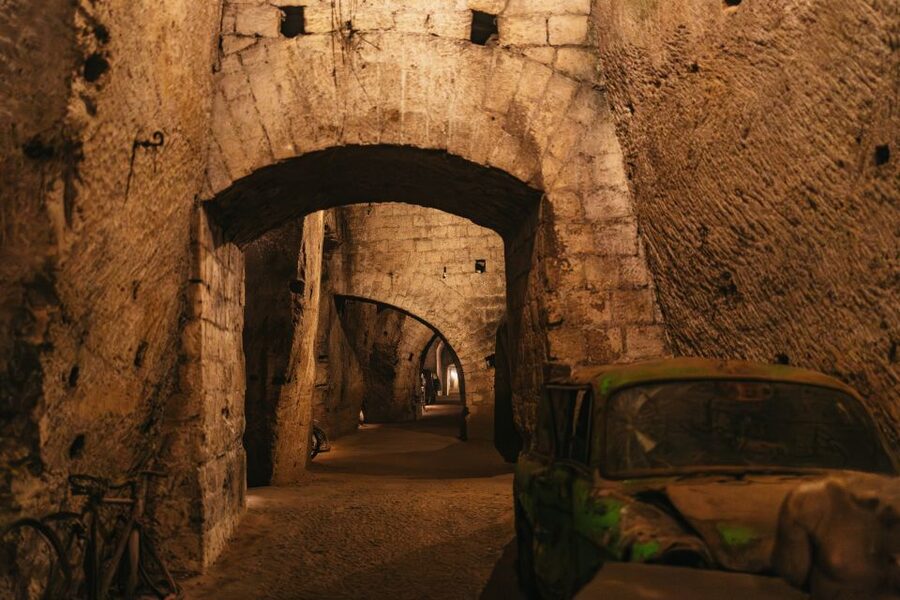
- Built in 1853 by Ferdinand II and shaped by political events, then repurposed in WWII
- WWII underground finds including a water tank used as a bomb shelter and wartime messages
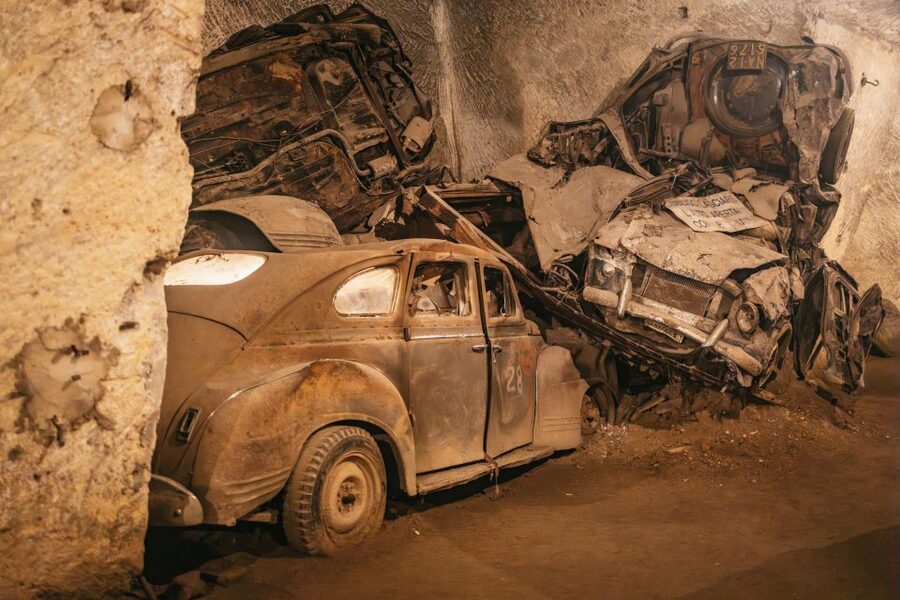
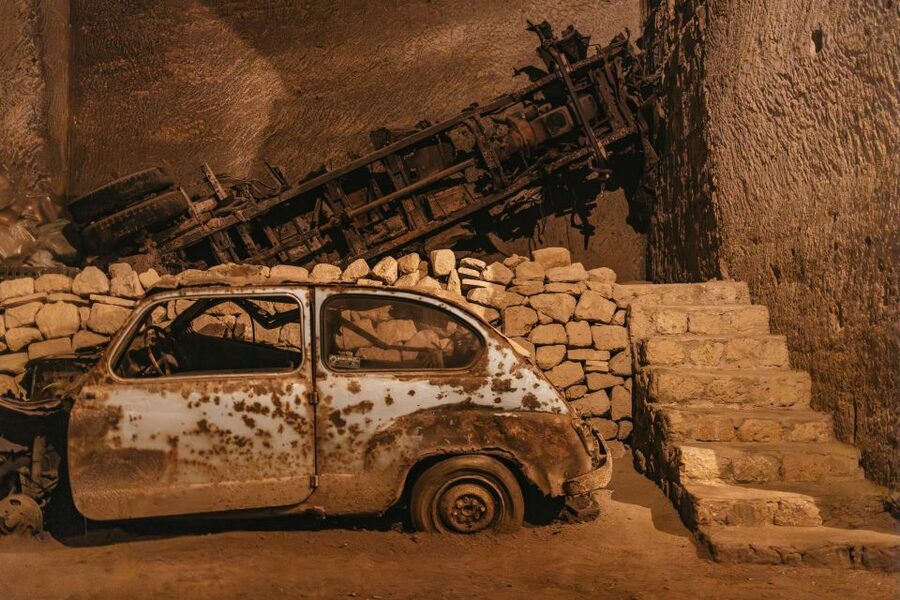
- Fascist-period statue remains plus an exhibition of abandoned cars and motorcycles
- Two route options, including Via delle Memorie if you want more walking underground
- A guide who makes details click, with English and Italian narration available
Why the Bourbon Tunnel feels different under the city
Naples is loud above ground. Down here, it’s a different kind of intensity: cool air, stone walls, and a guided story that moves across centuries without feeling like a lecture.
What makes the Bourbon Tunnel memorable is the emotional logic of the place. You’re not just looking at tunnels. You’re tracing why they existed, what they protected, and how ordinary life kept going—sometimes in desperate conditions—beneath a living city.
I also like that the tour gives you variety in what you see. One section is more engineering and survival. Another is more about artifacts and the human layer, including messages and objects that feel startlingly personal.
You can also read our reviews of more tours and experiences in Naples.


From royal escape plan to WWII hospital: the tunnel’s timeline
This tunnel network was built in 1853 by Ferdinand II of Bourbon. The reason matters: the plan was tied to fears of rebellion and escape routes connected to the Royal Palace.
The work didn’t finish as intended. Later, during World War II, the tunnels were reused as a military hospital, and then after the war they became the Hall Judicial Deposit. That shift explains why the underground feels like multiple places at once: power and fear, then medicine and confinement, then storage and evidence of what was left behind.
One of the tour’s most affecting elements is how the war left marks in the subsoil. You can find handwritten messages of wishes and desolation, the kind of details that make history stop being abstract. It’s not only about the tunnel’s age—it’s about what people needed from it.
The tour start in the Palazzo Serra di Cassano basement
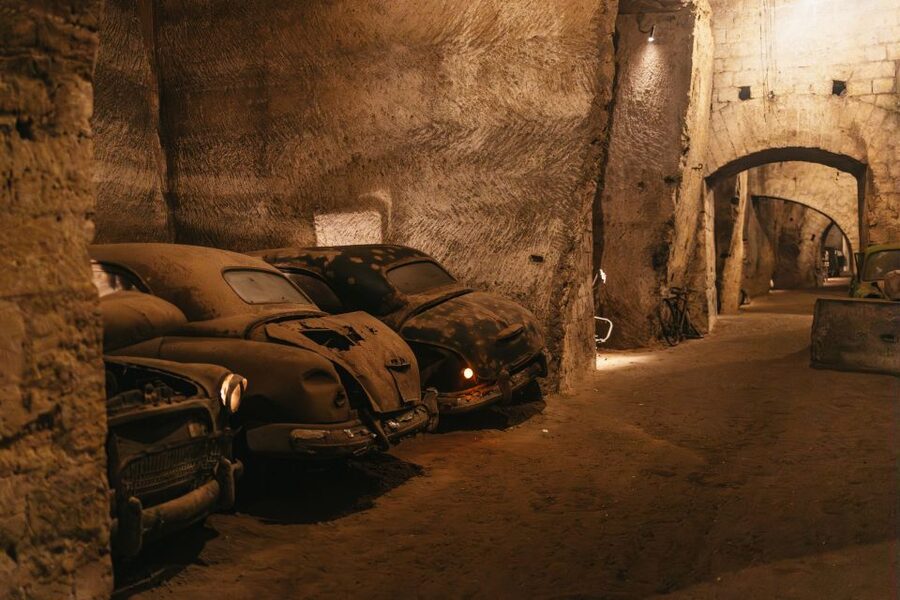
Your guided route begins from the Palazzo Serra di Cassano basement. If you’ve been spending your Naples day on the usual streets, this start point helps you understand you’re entering a different system of the city, not a random “sight in the dark.”
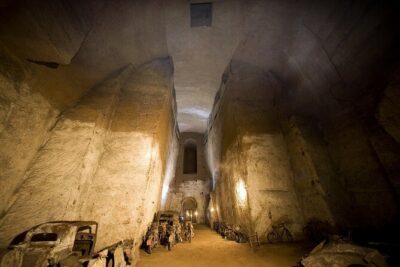
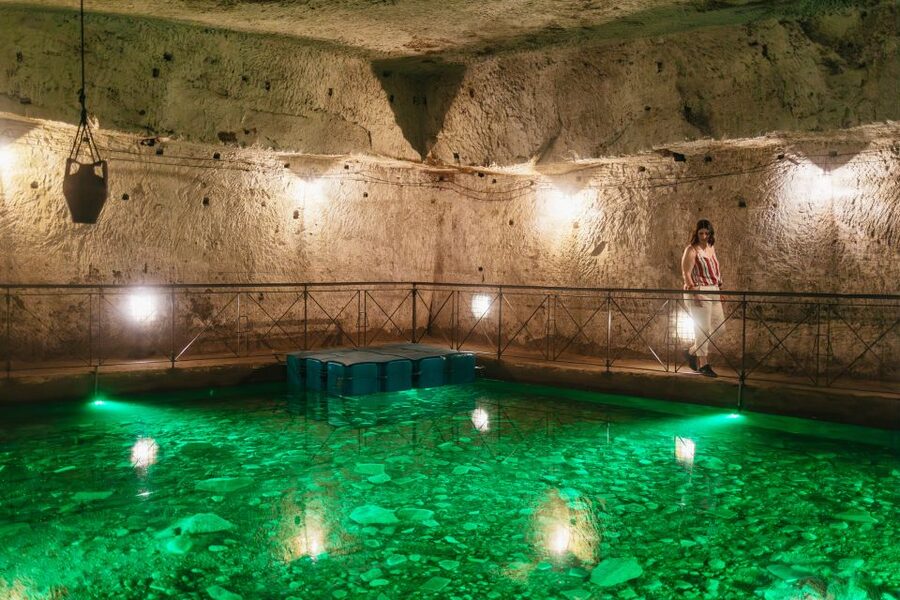
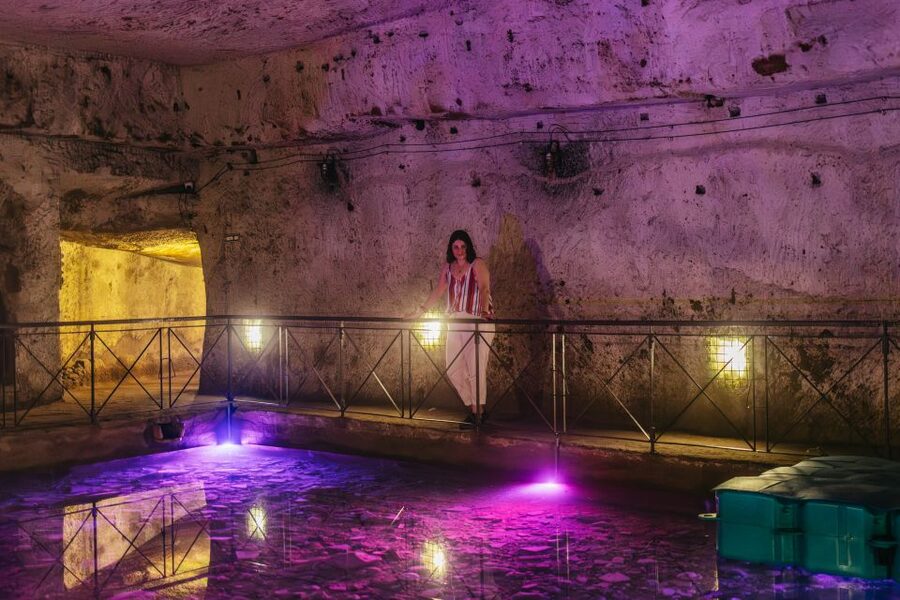
Early on, the tour focuses on what’s been uncovered and how the tunnels evolved. You’ll encounter WWII-related finds as well as older underground features, including 16th-century caves. You also visit a 17th-century water tank, later used as a bomb shelter.
That bomb shelter detail is more than trivia. It helps you picture how people adapted underground to survive air raids: water storage wasn’t just useful as a resource; it became part of the sheltering geography. It’s the kind of practical history that sticks.
WWIIsurvival engineering: what you see inside the chambers
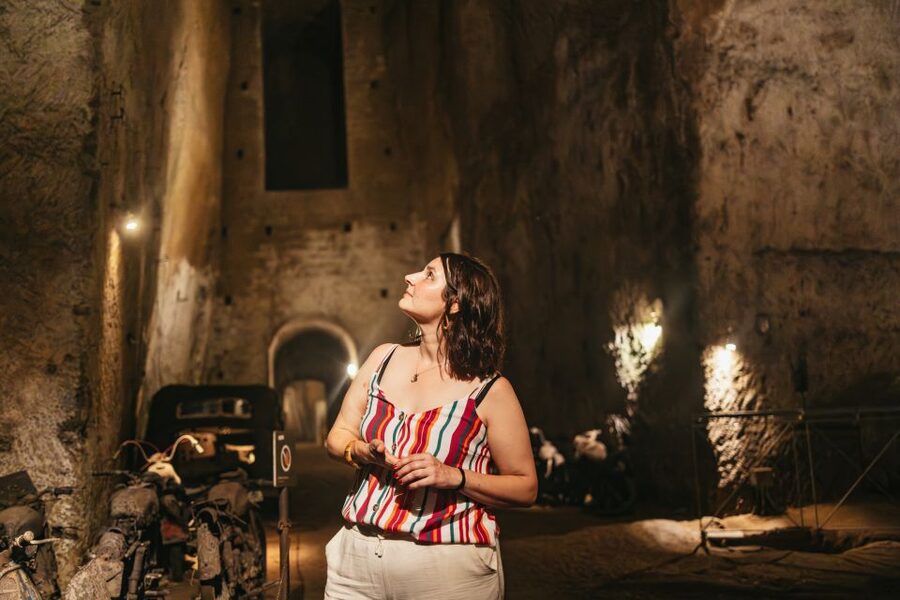
The tunnel isn’t one long corridor with one viewpoint. It’s a sequence of chambers and narrow passages where the guide connects function to story.
You’ll see evidence of sheltering civilians and the realities of underground life during the war period. The guide’s pacing matters here because the setting can be echo-prone and visually dim, so you’ll want to listen for how each stop relates to the bigger timeline.
One thing I like is that the tour doesn’t treat the tunnels as only tragic. It also points out the engineering achievements of the underground space. That balance makes the experience feel more complete: survival and construction, fear and practicality.
The artifacts stop: statues, messages, and an auto museum underground
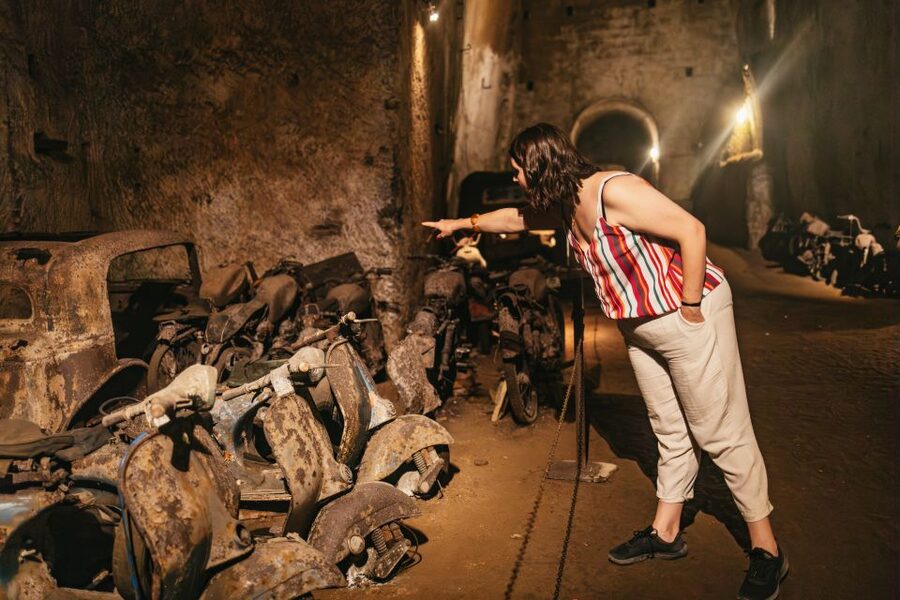
A major reason I think this tour is worth doing in Naples is the “artifact density.” You don’t just hear about history—you see objects that help you understand it.
In the tunnels, you’ll find statues dating back to the fascist period, alongside an exhibition of cars and motorcycles. These vehicles had been abandoned for years, then cleared and freed from rubbish so they could be displayed again. It’s an odd and powerful feeling to see transportation equipment down underground, as if the city’s motion briefly got paused below street level.
Then there are the handwritten messages: wishes and desolation left behind in the tunnel environment. Those notes turn the underground into a human record, not just a physical structure. For a lot of people, that’s the moment the tour shifts from interesting to memorable.
If your idea of a great tour includes real remnants, this is one of the better Naples underground experiences for that.
Via delle Memorie option: extra walking through tuff and extra steps
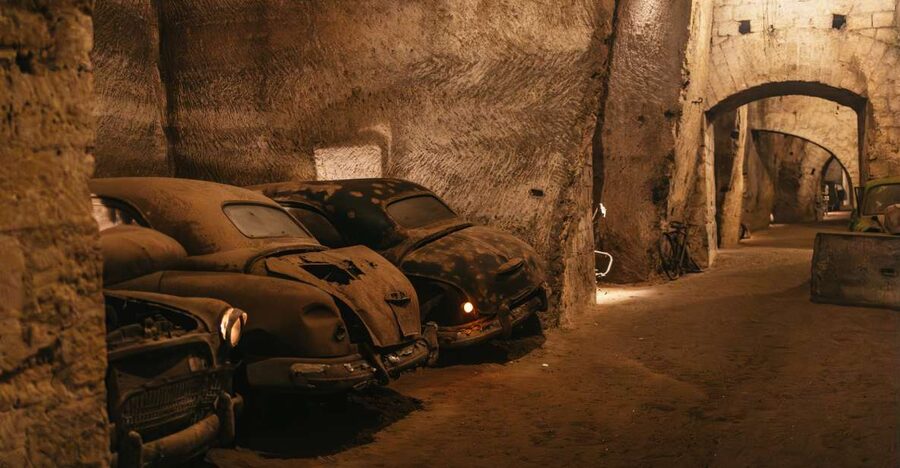
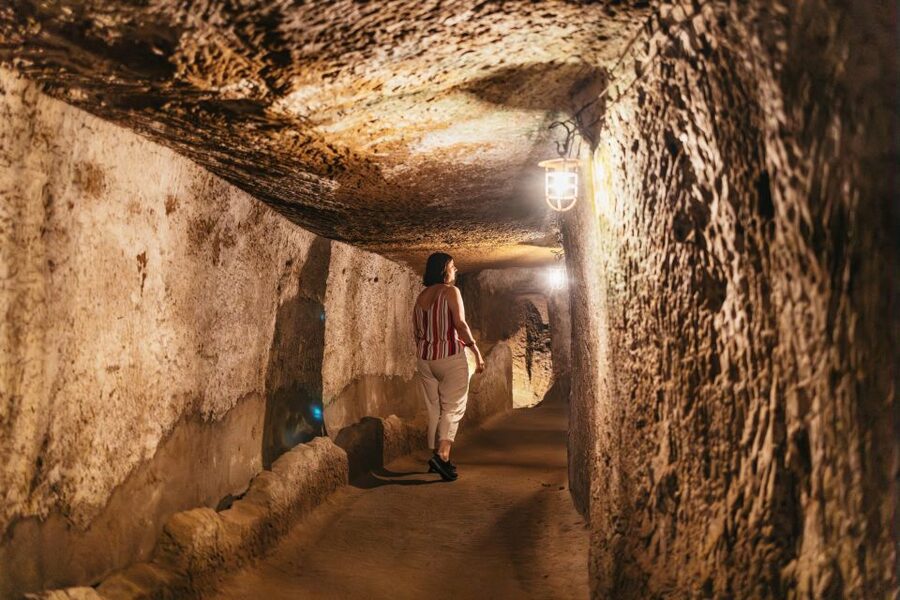
There’s also an option to add the Via delle Memorie route. If you choose it, you’ll walk an underground route carved out of the tuff, the volcanic stone Naples is known for.
This option is best if you want more time moving through the underground system and less time only listening. It also adds more physical challenge right at the start: the entrance is 115 steps on the Via delle Memorie option, compared with 90 steps for the standard entrance.
That difference matters if you have knee issues, mobility limits, or you’re traveling with someone who tires quickly. The good news is that the tour is only about one hour, so you’re not committing to a long climb.
What the last section adds before you exit
Near the end, the tour brings you through the last stretch of the tunnel route. This is where the story feels like it’s closing the loop: you’ve seen the key eras, the sheltering logic, and the artifacts, so you’re ready for the final walk-out segment.
Practically, pay attention to what the ending looks like. The tour exits through an underground car park, which can feel slightly surreal if you came expecting a clean return to a street corner. Give yourself a minute to reorient, then continue your Naples day like normal.
If you like buying a small souvenir tied to the experience, there’s also a small gift shop at the end, stocked with interesting artifacts.
Guides and pacing: what makes the storytelling work
On this tour, the guide is the product. You’re dealing with a confined environment, so good narration helps you stay oriented and interested.
This tour offers live guiding in English and Italian, and it’s set up as a small group. That small size shows up in how much room there is for questions, and it also affects how smoothly the group moves through the narrow steps and chambers.
I’ve seen guides like Martina, Alexandria, Alessandra, David, and Marco show up in different visits, and the common thread in those accounts is enthusiasm paired with clear structure. The best guides also handle group pacing well, which matters when you’re working up and down steep stairs.
One minor audio consideration: some chambers can be echoey, so you might find it harder to hear in a few spots. You’ll get the most out of it by staying closer to your guide and not counting on every word to carry perfectly through the stone.
Logistics that matter: steps, footwear, and traveling light
Let’s talk about the staircase, since it’s the biggest real-world factor.
- Standard entrance: 90 steps
- Via delle Memorie option: 115 steps
- Children under 10 can enter for free
Those steps are narrow and steep. If you have knee problems, plan to take it slowly and use the rail if there is one. Wear shoes with grip; underground surfaces can feel slick or uneven, especially in older spaces.
Also, travel light if you can. One group experience involved stroller issues, and even when strollers aren’t fully banned in every situation, the reality is that any extra bulky item can slow down a narrow-space tour. If you can, leave strollers and large bags with the lightest setup possible.
The upside: once you get down, the tunnel environment tends to feel like a cool break from a hot Naples day.
Price and value: is $17 worth an hour?
At $17 per person for a 1-hour guided tour, the value is strong for three reasons.
First, you’re not paying only for access to a tunnel. You’re paying for a guide who can connect the tunnel’s “why” across eras—royal escape planning, fascist-period remains, and WWII sheltering—while you physically move through the space.
Second, the tour includes a lot of tangible content for the time. Statues, vehicles, handwritten messages, caves, and a water tank shelter are all part of the same hour-long path.
Third, the option to add Via delle Memorie means you can scale the experience. If you’re the type who wants more walking underground, you have that choice.
If you’re doing a first underground tour in Naples, this price point is a smart way to test the format. If you love underground spaces, it also gives you a different perspective than the more famous underground Naples attractions because it focuses on the Bourbon Tunnel’s specific history.
Who should book this Bourbon Tunnel tour
This is a good fit if you’re into any of these themes:
- Naples history that goes beyond street-level postcards
- WWII survival stories and how cities adapt underground
- Real artifacts: messages, statues, and even cars and motorcycles
It’s also fun for teens and families who can handle steps. There are accounts of kids age 8 through 15 enjoying it, and the pacing can work well if everyone stays together and takes breaks when needed.
If you should consider another option: if mobility is limited, or if the idea of 90 to 115 steep steps at the start sounds stressful, you may want to rethink. The tunnel itself is cool and fascinating, but the stair approach is the challenge.
Should you book the Bourbon Tunnel Guided Tour?
Yes, if you want an underground Naples stop that feels focused and story-driven, with physical remnants that make the past click fast. The $17 price for an hour is a fair deal, and the mix of WWII sheltering details, fascist-era remains, and the vehicle exhibition gives you more than just “dark hallway sightseeing.”
Book it especially if you’re the type who loves a guided narrative and you’re comfortable with stairs. Bring grippy shoes, travel light, and plan your day so you’re not rushed right at the exit near the underground car park.
If stairs are a dealbreaker, skip this one and save your energy for other Naples sights that don’t start with a stair climb.
FAQ
How long is the Bourbon Tunnel guided tour?
The tour lasts about 1 hour, though it’s best to check starting times based on availability.
Where does the tour start?
The tour starts from the Palazzo Serra di Cassano basement. The meeting point can vary depending on the option you book.
What is the price?
The price is $17 per person.
What entrance step count should I expect?
You’ll face 90 steps at the entrance. If you choose the option that starts from the Via delle Memorie route, it’s 115 steps.
Is there an option that includes Via delle Memorie?
Yes. If you select the Via delle Memorie option, you’ll walk an underground route carved out of the tuff.
What languages are available for the guided tour?
The guide is available in English and Italian.
Is the group size small?
Yes. The tour offers a small group format.
Are there free entry rules for children?
Yes. Children under 10 can enter for free.
Do I get a guided tour with the entrance ticket?
Yes. The ticket includes entry plus a guided tour (and the Via delle Memorie route if you select that option).
Is free cancellation offered?
Yes. You can cancel up to 24 hours in advance for a full refund.